
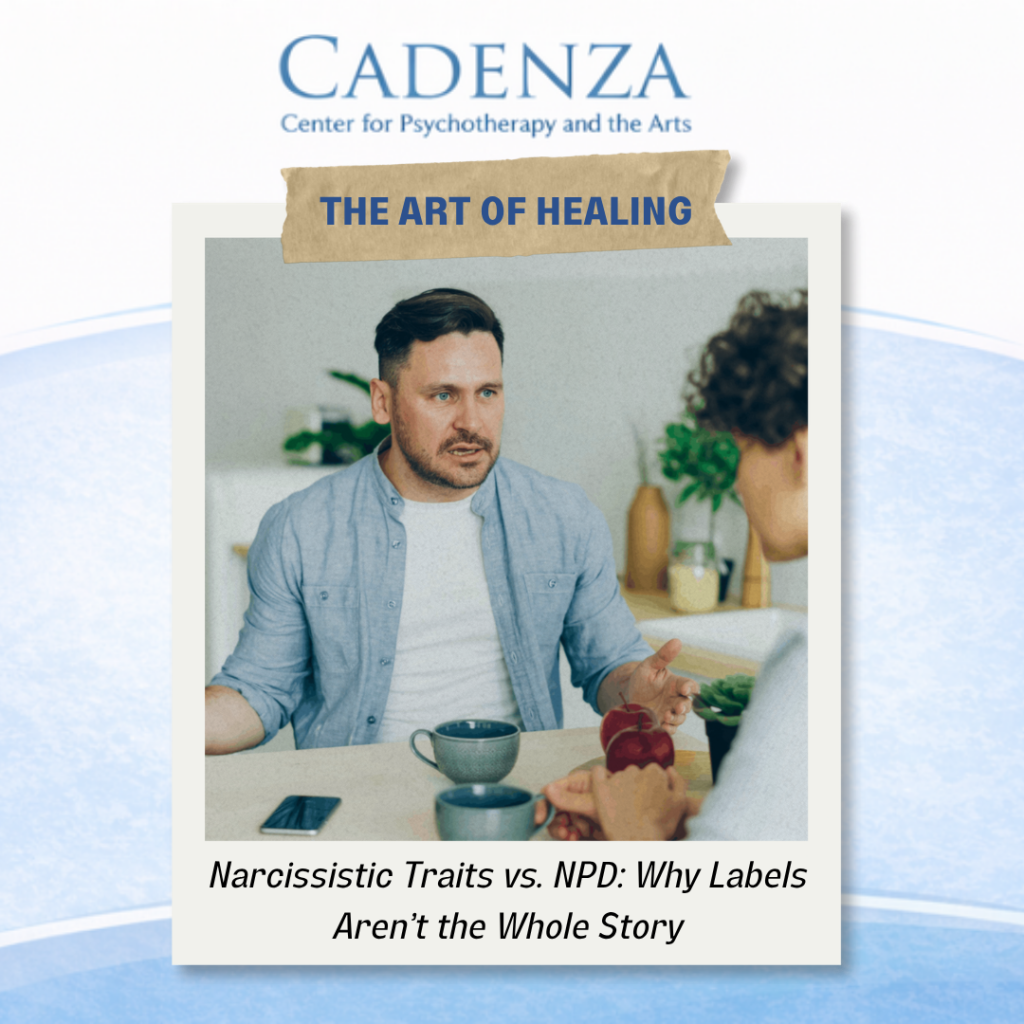
The word “narcissist” is often used to make sense of painful relationships, but not every difficult interaction points to Narcissistic Personality Disorder. A new blog by Debra Cohen-Melamed, LCSW, breaks down the difference between narcissistic traits and a clinical diagnosis, and why that distinction matters for healing. Instead of getting stuck on labels, the article shifts attention toward understanding relationship patterns, rebuilding self-trust, and working through emotional pain in a way that supports real progress.
Narcissistic Traits vs. Narcissistic Personality Disorder: Why the Difference Matters
Is it a phase — or something more?
Parenting a young child comes with a lot of questions. Is this normal? Should I be worried?
Cadenza Center’s licensed child psychologists created a free guide, Phase or Pattern?, to help parents of children ages 2–8 find answers. Inside, you’ll discover which behaviors are developmentally typical, which warrant closer attention, and the three signs that often point to a professional evaluation.
All written in plain language, without pressure or clinical jargon.
Because you deserve a clear answer, not more uncertainty.
Now Accepting New Clients – Immediate Availability
Cadenza Center currently has immediate availability for psychoeducational testing and evaluations, as well as therapy services for children, teens, and adults. Music therapy services are also available for individuals who benefit from a creative, integrative approach to care. If you’ve been considering support or waiting for the right time, this is an opportunity to get started without delay. Our team is here to provide thoughtful, personalized care to help you or your loved one move forward with clarity and confidence.
When Logic Goes Offline: Why “Calm Down” Doesn’t Work and What’s Really Happening in the Brain
We’ve all seen moments when someone shifts quickly from calm to overwhelmed—whether it’s a child melting down after a small change, a teen shutting down after feeling misunderstood, or an adult reacting strongly to a neutral comment. In those moments, it isn’t a lack of understanding; it’s that stress temporarily reduces access to clear thinking. When the nervous system reads a situation as threatening, it moves into survival mode, triggering a fast physical response while the parts of the brain responsible for reasoning and perspective-taking become less available. That’s why logic, reassurance, or explanation often don’t land in the heat of the moment. What tends to help more is steadiness: a calm presence, fewer words, and simple acknowledgment of what the person is feeling. As the body settles, thinking becomes more flexible again, and reflection returns. Over time, repeated experiences of calm support after distress help build greater capacity to stay grounded during strong emotions, making it easier for thinking and feeling to work together.
See The Difference We are Making
Discover inspiring success stories from individuals and families who have partnered with the Cadenza Center to overcome challenges and achieve their goals. These stories highlight the resilience, growth, and transformation that are possible with the right support.
Have you had a positive experience with us? We’d love to hear your story! Your feedback not only helps us improve but also inspires others to take the first step toward their own journey of change. Together, we can continue to make a meaningful impact!



