A new TikTok phrase — “the rabbit got me” — has become a surprisingly accurate way for people to describe the moment life shifts without warning. What looks whimsical on the surface is actually deeply psychological: it reflects the human need for symbolization when we’re navigating something unexpected, disorienting, or emotionally complex.
Winnicott called this inner territory transitional space — the mental zone between what is real and what is not yet fully understood. It’s where children use play to make sense of the world, and where adults unconsciously return when life demands more meaning than we currently have language for. Metaphor is the adult version of a transitional object, allowing us to hold an overwhelming experience gently, symbolically, before we can hold it directly. That’s why people don’t say, “I’m grappling with an unexpected rupture in my certainty, identity, or sense of control.” They say, “The rabbit got me.” The metaphor becomes a safe and spacious container — neither denial nor full confrontation — where the psyche can begin to organize itself.
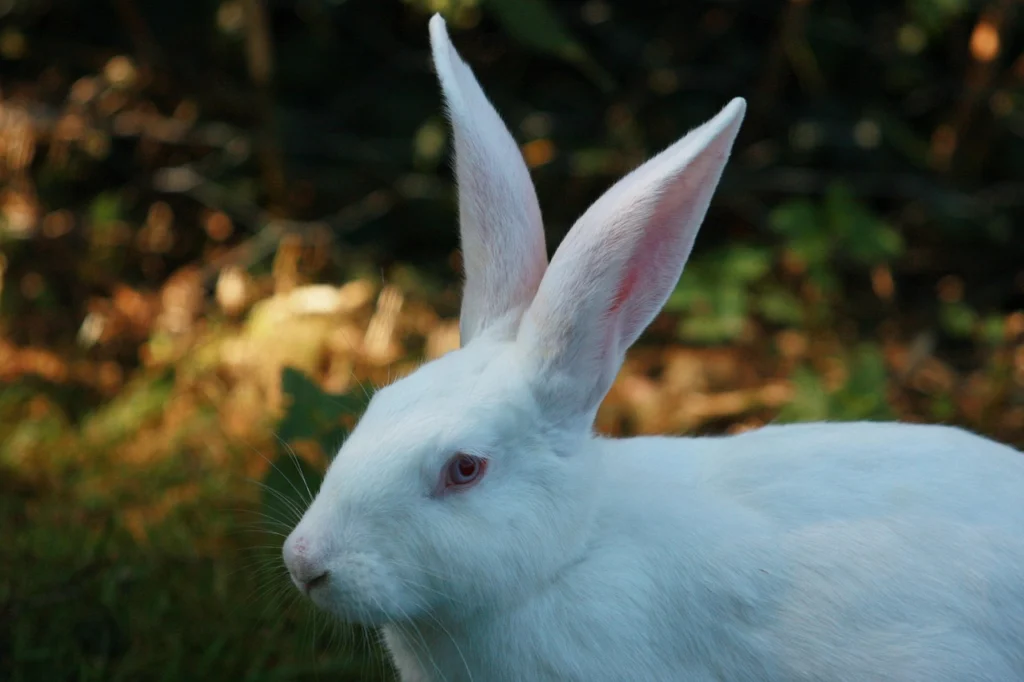
Before we can understand why this phrase carries such cultural weight, it helps to understand the symbol at its center. Rabbits have long represented liminality, quick shifts, sudden movement, and the transition between what is seen and what is hidden. They dart in and out of thresholds, disappear underground, and emerge unpredictably — creatures of both vulnerability and swiftness. But in Alice in Wonderland, the White Rabbit becomes something deeper and more archetypal: a catalyst that pulls Alice from the familiar into the unknown. She does not choose transformation so much as she stumbles into it. Her life divides into the moment before she saw the rabbit, and everything that came after. When people today say, “That’s when the rabbit got me,” they are naming the instant their world shifted faster than their understanding could keep up.
These moments illustrate how clients often feel the shift before they understand it:
- “She earned the promotion she had wanted for years, yet cried in her car during every lunch break, unable to explain why success felt like loss.”
- “He was interviewing for a job promotion when he realized he no longer recognized himself in the life he was building.”
- “After her son left for college, she walked through the house as if listening for something that wasn’t there.”
Each could say, with stunning accuracy: “That’s when the rabbit got me.” Because the metaphor tells the truth, even before the mind can.
In therapy, this is often the moment I listen for most closely — the point at which the client felt the shift before they could speak it. One person told me she earned the promotion she had worked toward for years, yet found herself crying in her car every afternoon, bewildered by the sudden sense of loss woven into her accomplishment. Another described planning the wedding he had imagined for so long, only to realize he no longer recognized the version of himself making the decisions. A mother wandered through her home after dropping her son at college, sensing something missing before she had the words to describe the emotional rearrangement taking place. Someone else received a single phone call that dissolved an entire imagined future. Each of them was living through an experience the psyche had registered before language could catch up. Each was describing, in their own way, the moment the rabbit got them.
This is where metaphors become psychologically essential. Metaphors contain “the moment before language” — the raw emotional material that has not yet crystallized into narrative. They hold bodily sensation, intuition, relational tension, confusion, and unspoken longing in a single symbolic form. In Winnicott’s terms, metaphors inhabit the transitional space between what we feel and what we can consciously understand. They allow the psyche to express something true without prematurely committing it to a fixed meaning. They carry the emotional weight of the experience before cognition has caught up.
There are several reasons why the psyche turns instinctively to metaphor in these threshold moments
First, metaphors create psychological safety. Symbolizing the experience allows us to acknowledge that something significant is happening without having to confront its full intensity. Metaphor softens shame and preserves dignity by giving us a way to speak indirectly while remaining honest.
Second, metaphors organize complexity. Sudden change often arrives in layers — emotional, cognitive, physical, relational, and spiritual — and metaphor gathers those layers into one coherent shape. It prevents fragmentation by providing a unified image the mind can hold onto.
Third, metaphors protect us from self-blame. Saying “the rabbit got me” externalizes the disruption just enough to make space for compassion. It shifts the story from “I should have prevented this” to “something unexpected pulled me into a new reality.” This reframing is often essential for healing.
Finally, metaphors allow for slow integration. They provide an interim symbolic container where feelings and impressions can exist without being forced into premature interpretation. Insight emerges organically as the metaphor allows the psyche to metabolize what the body and emotions already know.
This is also why the language my clients use matters so deeply to me. I have long been drawn to metaphor — years ago I kept three thick binders in my office filled with readings on music, metaphor, symbolization, and psychotherapy. That early fascination has shaped how I listen today. I pay attention to the symbolic lexicon a client naturally reaches for, because the metaphor is often speaking the truth before conscious awareness arrives. A client might say they feel like they are “drowning,” “walking through fog,” “locked out of their own life,” or “falling down a rabbit hole.” These images reveal the emotional architecture of the experience far more clearly than literal explanations ever could. I do not interpret these metaphors for them; instead, I hold them with curiosity and return to them over time. The metaphor becomes a shared symbolic space — a Winnicottian transitional field — where the client’s inner world becomes thinkable, nameable, and eventually transformable.
Metaphors are not decorations in language; they are the mind’s oldest way of carrying what cannot yet be said directly. Whether in myth, dreams, therapy, or the ordinary language of everyday people, metaphors arise when life outgrows literal description. That is why I pay close attention to the symbols my clients choose — they are often speaking the truth before they consciously know it, revealing the emotional structure of an experience long before they can articulate its meaning.
What the metaphor contains is often more than the conscious mind can articulate. It holds the in-between: the moment before language, the space between who we were and who we are becoming, the instinct to externalize what we did not choose, and the need to make meaning slowly and gently. “The rabbit” is psychological scaffolding — a symbolic outline sturdy enough to support experience until its meaning can be filled in.
In the end, we create new language when the old language is too small. “The rabbit got me” reflects a universal truth: that life sometimes pulls us forward faster than we can comprehend, and that metaphor becomes our first act of survival, integration, and meaning-making. Sometimes the psyche needs a symbolic bridge — a transitional space — before we can fully step into what comes next.
And perhaps that is the quiet invitation inside every “rabbit got me” moment: to pause, to reflect, and to listen more closely to the symbols that rise when literal language fails us. These moments — whether we name them or simply feel their tremor — offer a rare opening to explore what is unfolding beneath the surface of our lives.
In therapy, they can become thresholds into deeper understanding, places where we trace the emotional imprint of the rabbit rather than run from it. Whether the rabbit has gotten you recently or not at all, the metaphor itself invites a question worth sitting with: What symbols are shaping the story you’re living, and what truths are they carrying before you’ve fully found the words?